FAQ: Playing clarinet in the Arctic
I spent three months this year playing clarinet in the Arctic, and I’m here to answer some of the most common questions I received during and after these residencies!
In case you missed it, here is a detailed account of my Mission: Evolution project, as well as behind-the-scenes details from my residencies.
Leave a comment with any questions you have – maybe there will be a part 2!
What were you doing in the Arctic?
I was selected to complete artist residencies in Ilulissat, Greenland and Longyearbyen, Svalbard, some of the northernmost towns on Earth. I was in the Arctic from March-May 2025 completing my projects.
Why did you choose to go to the Arctic?
I’ve always been fascinated by lesser-travelled locations, especially in extreme locations. I enjoy learning about music and cultural history, and it’s fascinating to me that the arts can thrive in even the most remote places. Two specific events helped me select the Arctic as my next adventure: I had recently visited the International Antarctic Centre in Christchurch, NZ, where I began learning about polar exploration. I had also recently looked up “world’s least travelled destinations,” which included Svalbard. After both of these, I quickly decided that I would plan an Arctic adventure!
Why would you ever play a wooden clarinet outside, especially in the Arctic?!
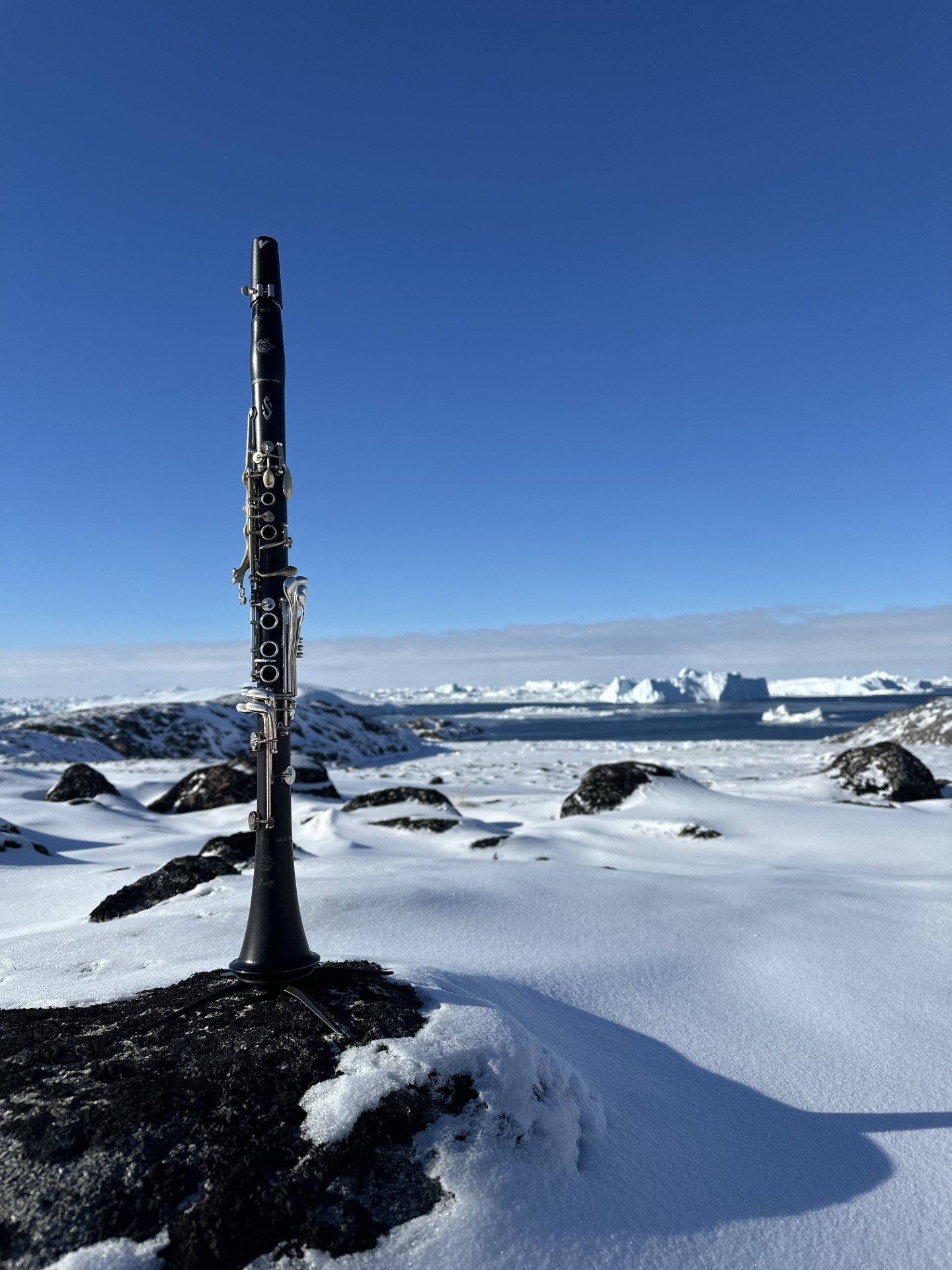
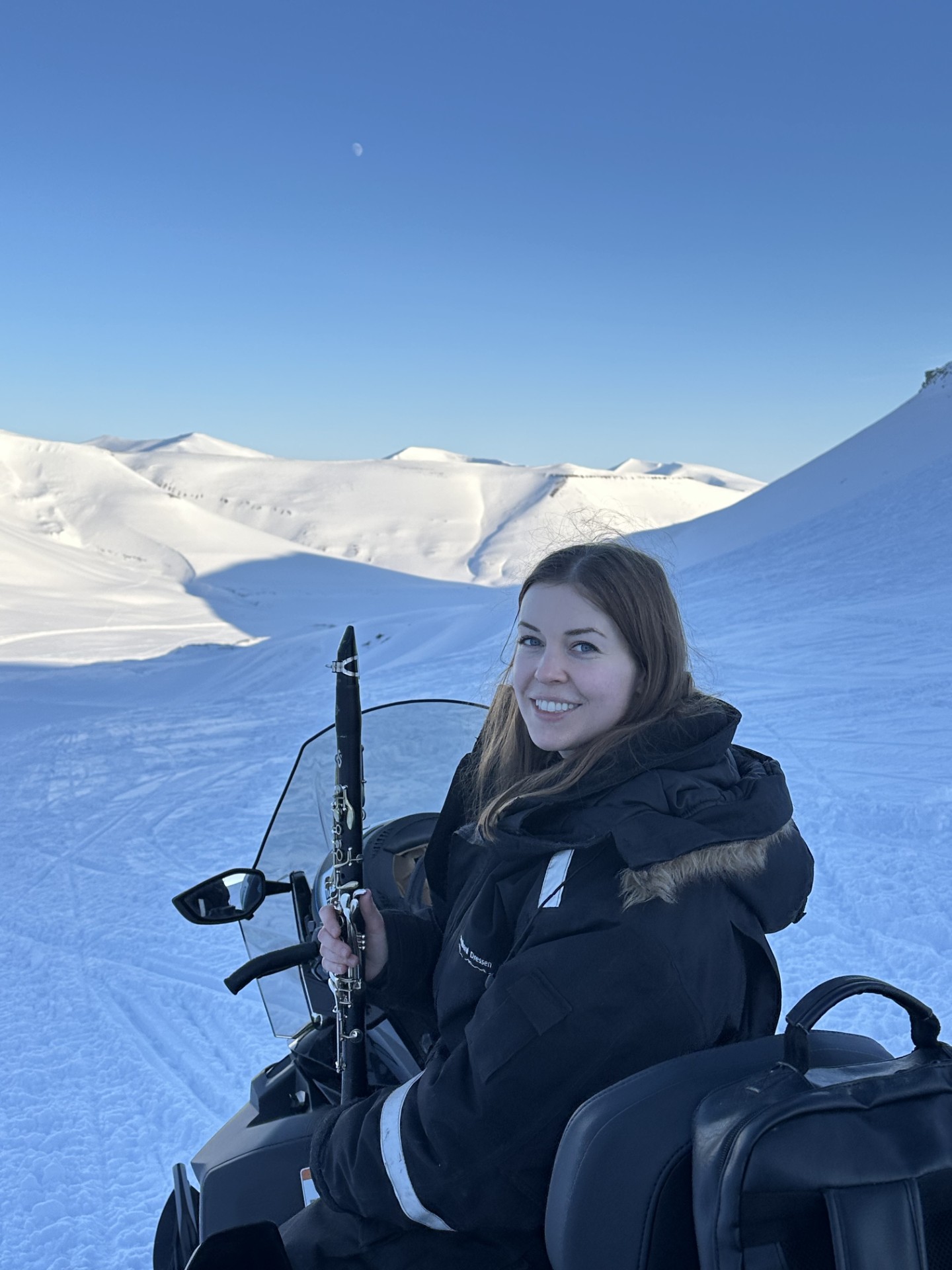
I got this question multiple times during my residency as I began sharing photos of my Arctic adventures with my clarinet (snowmobiling, playing in an igloo, winter kayaking, ice cave spelunking, hiking in the backcountry). I completely understand why – playing a wood clarinet outdoors is something you should never do, unless you’re doing it in the name of clarinet science, as I was! This was a special project I completed with Henri Selmer Paris to test the limits of their Evolution system clarinets.
Did your clarinet crack?
No! To be perfectly honest, I was shocked. I was so sure that it was going to crack, and I was incredibly anxious the first few times I played outside (especially since there are no clarinet techs in Greenland or Svalbard, so if it cracked, it was game over for me!). Not only did the clarinet not crack, but the keys didn’t even bind.
Did you do something special to the clarinet to make it not crack?
No, not at all. This is a regular Evolution system clarinet given to me for this project. Nothing has been done to “cold-proof” the clarinet, and the Evolution system comes on all Henri Selmer Paris clarinets. The only things I did to help prepare it for the extreme cold were to generously apply cork grease before going outside (my frozen hands had a tendency to hold the clarinet in a vice-grip) and let it thaw for several hours once we were back inside.
How was the tuning?
Not great! Cold weather = lower pitch for clarinet, so let’s just say that I was well below optimal tuning!
What was the temperature?
The temperature ranged from around -30°C (-22°F) to 0°C (32°F) during my three-month Arctic residency. The coldest temperature I played my clarinet outside was around -20°C (-4°F), and warmest was around 0°C (32°F) in the Longyearbyen ice cave.
Weren’t you cold?
Yes, but I love the cold! I also prepared by researching proper Arctic clothing and layers, which greatly helped fight the bitter cold. That being said, I still had to play clarinet outside without gloves on, so I did get very mild frostbite once playing outdoors (I’m completely fine now!).
Have you ever kayaked before?
Nope, never! Winter kayaking with a clarinet was one of my favorite Arctic memories, but also one of the scariest for me. I contacted Ivan at Greenland Backcountry to inquire about the possibility of winter kayaking in Ilulissat and told him about my project, and he was happy to help teach me the basics and shoot some incredible drone footage. I wasn’t afraid until it was time to get in the kayak, when I realized how easy it would be to flip over, especially as I put together the clarinet in the middle of the water amongst the icebergs!
What was your favorite part of your Arctic adventures?
It’s so hard to choose one moment – living in the Arctic for a few months has been one of the highlights of my life, and I’m so thankful to have this opportunity to experience it. It was very special for me to learn about culture where there is no classical music history (in the Western sense), so it was amazing to learn about the rich cultural, musical, and artistic communities in these locations. The people were so friendly and welcoming, and I hope to return one day soon to the Arctic.
That being said, I was surprised by how much I loved snowmobiling – I can’t wait to do that again!