Extreme clarinet playing in the Arctic
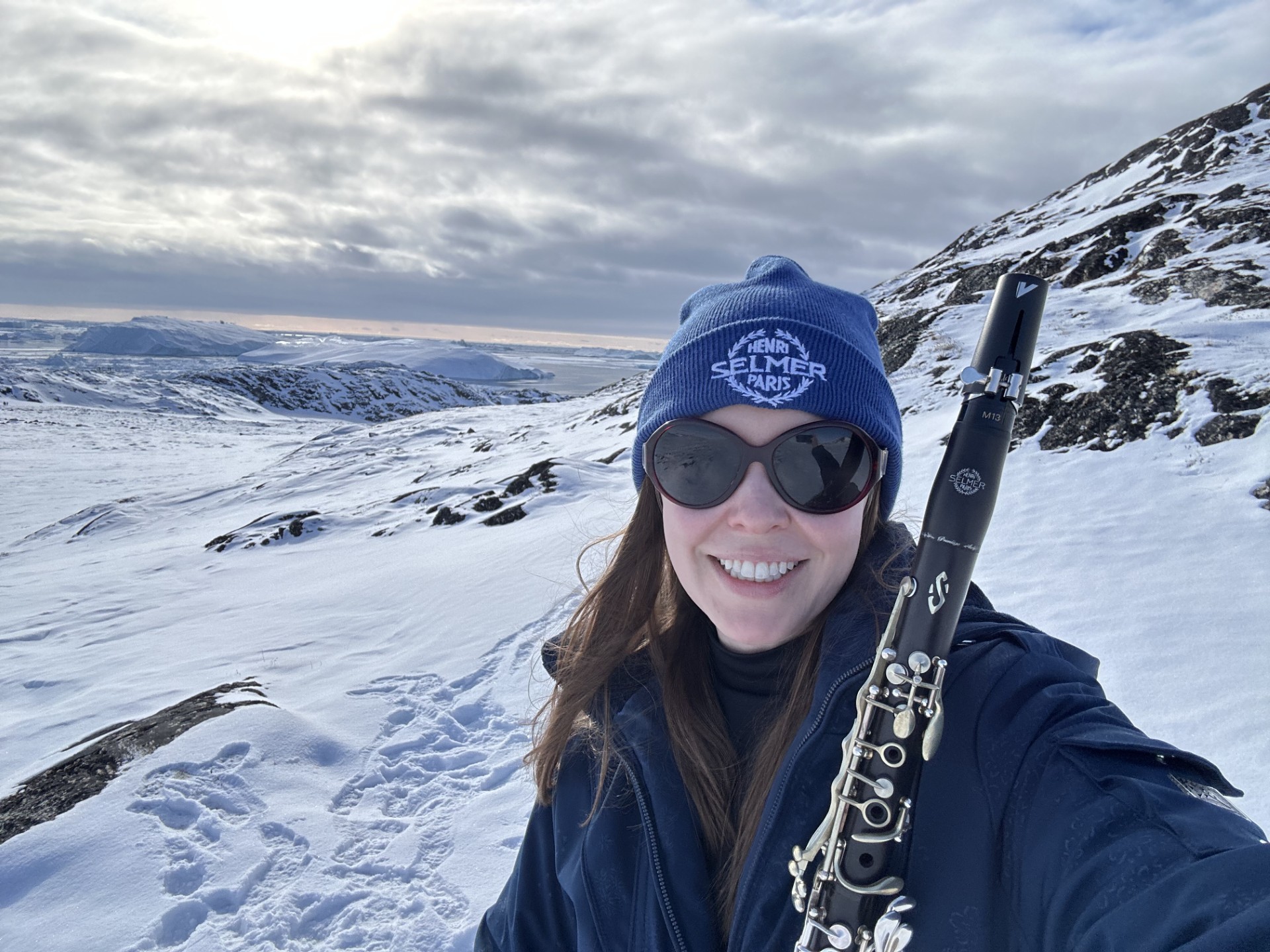
I spent three months this year performing clarinet in the Arctic.
“How is your clarinet ok?!”
“My clarinet cracked just looking at this post!”
“How is the tuning?”
These are some of the messages that flooded my inbox these last few months during my artist residencies in northern Greenland and Svalbard, where I played my Henri Selmer Paris Privilège Evolution system clarinet outside in subzero temperatures.
My clarinet and I braved kayaking amongst the icebergs, walking on glaciers, climbing mountains, and even spelunking and performing in an ice cave – and it didn’t crack (the keys didn’t even bind)!
The question I got asked most?
Why would you do this?
Backstory
Over a year ago, I applied to artist residencies in Ilulissat, Greenland (Arctic Culture Lab) and Longyearbyen, Svalbard (Spitsbergen Artists Center) to learn more about music, art, and culture in the Arctic. (These residencies are a continuation of my Clarinet Around the World research, where I study clarinet and music from different locations and cultures around the world.)
I was ecstatic to be selected for both residencies. One of my first calls after receiving the good news was to my friends at Henri Selmer Paris, as I was very concerned that my clarinet would crack during my three-month Arctic adventures. Ilulissat and Longyearbyen are some of the most northern towns on earth, and the extreme climates are both cold and dry – dangerous conditions for wood clarinets.
Mission: Evolution
When I spoke to Stéphane Gentil, clarinet product manager at Selmer Paris, he asked if I would be interested in testing the limits of the Evolution system in the Arctic. Initially, I was only planning to perform in indoor venues, but we both saw the unique opportunity to test the limits of Selmer’s Evolution system in these Arctic extremes.
The Evolution system is a special lining inserted into the upper joint of Selmer Paris clarinets to help make it more resistant to cracks. When designing this system, it was extensively tested in labs and workshops (and in freezers!), but there hadn’t been an opportunity to field test it … until now.
We named the project Mission: Evolution, and the goal was simple – play the clarinet outside in as many extreme environments as possible to see if it could withstand the extreme Arctic temperature and climate.
This project was in addition to my scheduled indoor recitals, and if it cracked, there were no clarinet repair techs in Ilulissat or Longyearbyen, so a lot was on the line for this project! (Due to strict luggage limitations, I travelled with only this Evolution clarinet and a plastic clarinet as a backup.)
We both strongly believe in the Evolution system and its ability to ward off cracks, but in a fight of clarinet vs. the Arctic – who would win?
The iceberg capital of the world
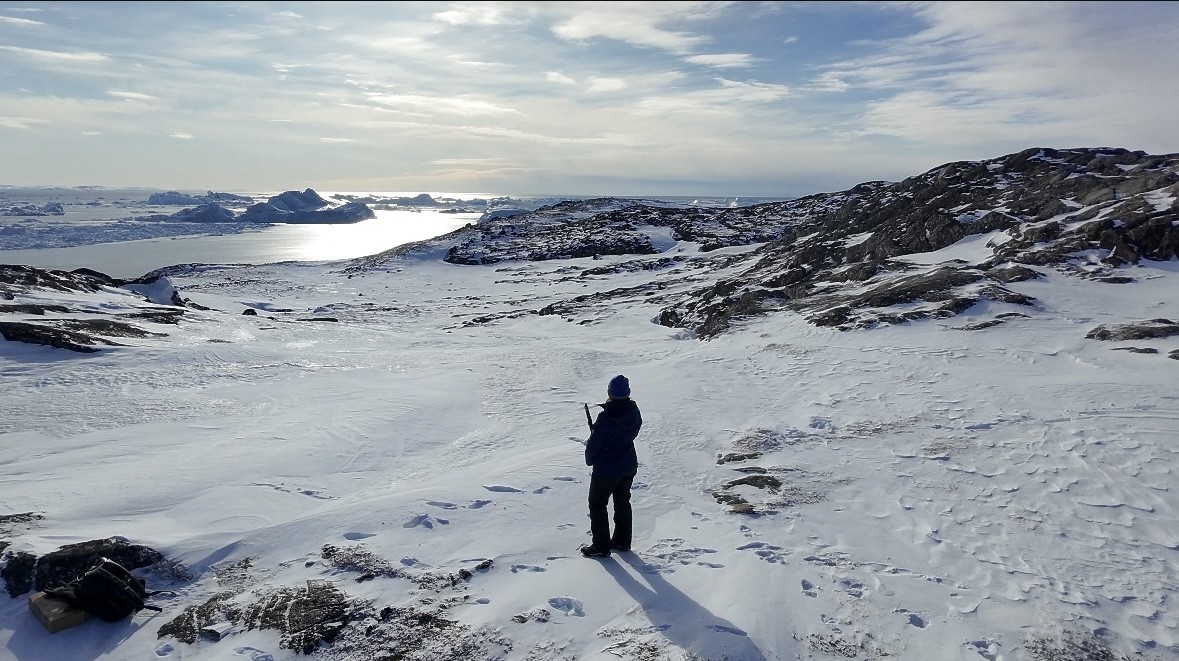
I arrived to Ilulissat, Greenland (the iceberg capital of the world) in early March 2025, greeted by a “warm” -5°C. After spending a few days exploring town, I ventured into the backcountry with my clarinet. Here, I began playing the clarinet outside in limited quantities to introduce it to the cold and also to protect my gloveless fingers.
To be perfectly honest, I was also really concerned that the clarinet would crack.
As I acclimated to the northern Greenland terrain and subzero temperatures, I began exploring further along the icefjord and backcountry. I began playing more frequently outside, slowly extending the duration and exposure. As I gained confidence, I began documenting the journey with my drone.
The clarinet held strong, and there were no cracks.
It was time for the next phase of Mission: Evolution.
Kayaking with a clarinet
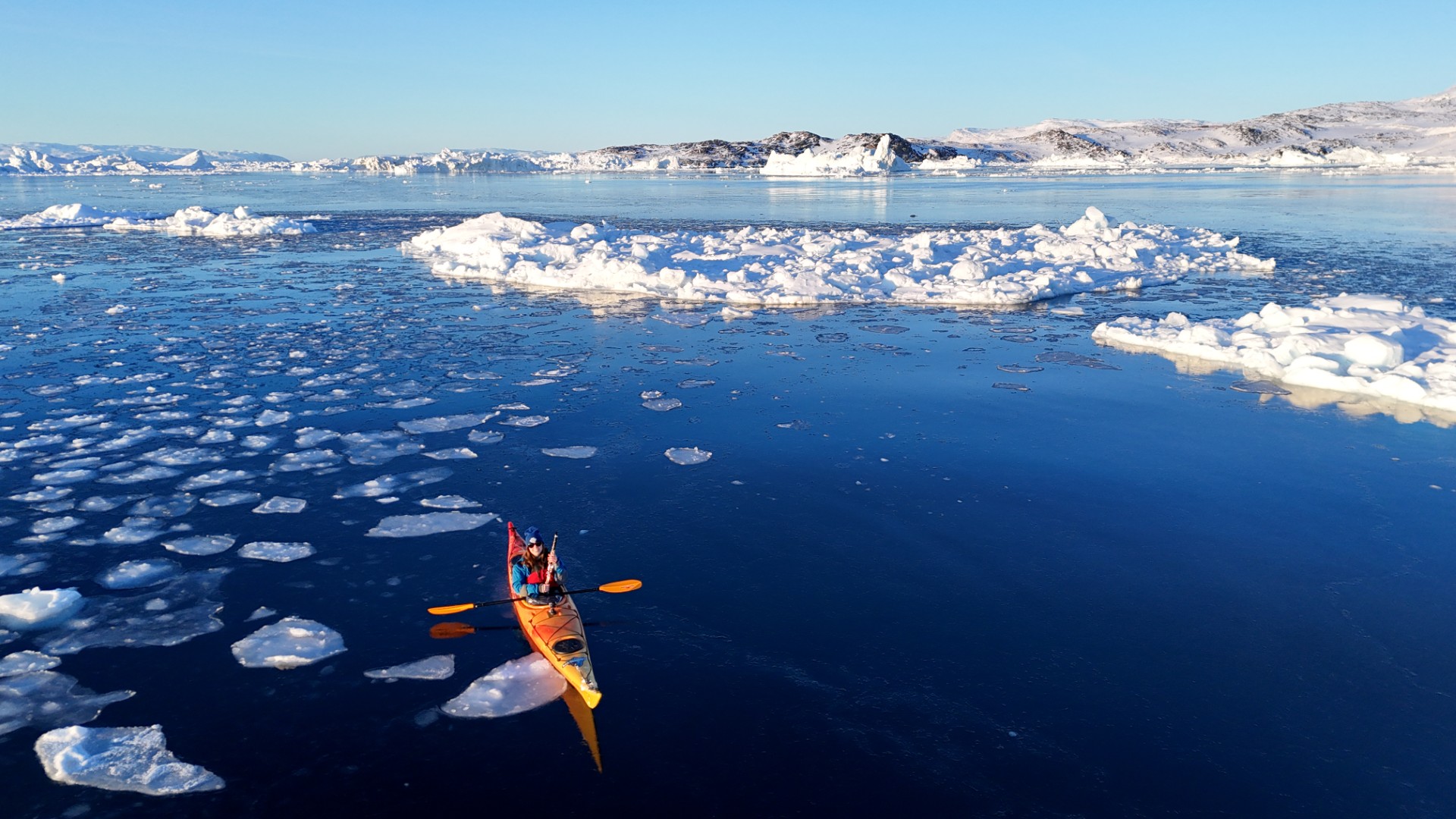
Emboldened by the clarinet’s resilience, I proposed playing clarinet on a winter kayaking expedition. I reached out to Ivan from Greenland Backcountry, who agreed to guide and film the adventure. (Check out my behind-the-scenes video!)
I’d never been kayaking before, so Ivan explained the basics and gave me a dry suit to wear in case I tipped over or fell in the water. (This was when the nerves kicked in…)
After slipping down snowy rocks to the shore, clarinet clutched tight, I slowly climbed into the kayak. It took a bit of practice to get comfortable balancing and steering the kayak (especially with the looming icebergs all around me), but after we moved further from shore, it was incredibly calm and peaceful.
As Ivan set up the drone to film, I paddled next to an iceberg to assemble the clarinet. I had packed the case in a DIY dry bag, and it wasn’t until that moment I realized how perilous it would be to assemble a clarinet in the small confines of a kayak. One sudden movement could send the clarinet (or me) toppling over.
After a few deep breaths to steady my nerves, I took off my gloves, braced myself against the icy air, and slowly assembled the clarinet. I had prepared the clarinet at home by slathering the corks with cork grease, which helped speed up the process and prevent the corks from snapping.
My fingers were already freezing by the time Ivan was ready to start filming with his drone (temperature was around -15°C), but as they say – the show must go on!
Even though I only played for about 10 minutes outside, my fingers could barely move by the time we had finished and I was ready to put away the clarinet. I was too cold to worry as much about dropping it into the icy depths, but I was still careful (especially since I couldn’t feel my fingers by this point).
Gloves back on, I slowly paddled over to Ivan. He mentioned it was lucky there weren’t any whales (!!!) or that the iceberg hadn’t calved or flipped over. I’m glad he mentioned this to me after instead of before – I’m not sure I would have been brave enough to attempt this given that knowledge!
Ivan and I paddled a bit further to enjoy a hot cup of tea from the thermos and enjoy the winter sunset over the icy water. This magical moment will forever be etched into my memory.
The not-so-glamorous but incredible part: I developed mild frostbite in my fingers from this excursion, but the clarinet was fine – no crack! (Don’t worry, I quickly recovered, and my fingers are fine now.)
The peaks of Longyearbyen
After a month in Ilulissat, it was time to head even further north. After a day in Copenhagen soaking up the warm weather, I ventured to Longyearbyen, Svalbard – the northernmost town on earth.
Svalbard is home to more polar bears than people, and you’re legally required to carry a firearm outside the town limits. From whales to polar bears – who knew my decision to play clarinet would pose these potential threats!
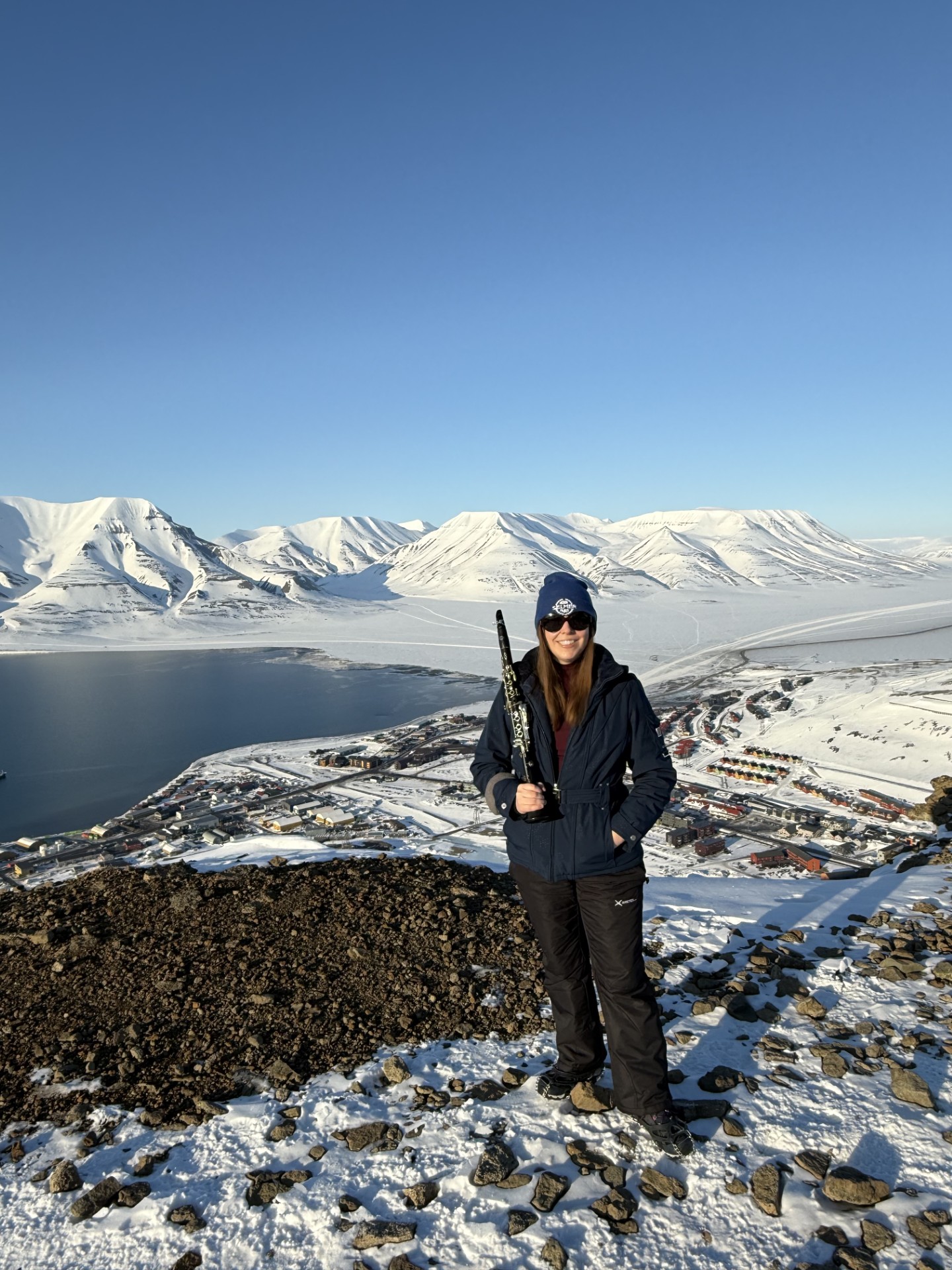
After a few weeks exploring the town of Longyearbyen, I hiked to the top of the mountain overlooking Longyearbyen (with two other locals carrying polar bear protection). The view was absolutely incredible, and I was mesmerized at the endless Arctic landscape disappearing into the horizon.
After taking a few minutes to catch my breath (the hike was steep!), I took out my clarinet to play Rhapsody in Blue at the summit and take some photos. Some other hikers joined us and asked for a few more tunes, which I happily obliged. After spending a couple of months in the Arctic, the -5°C temperature didn’t even phase me.
Performing in a cathedral of ice
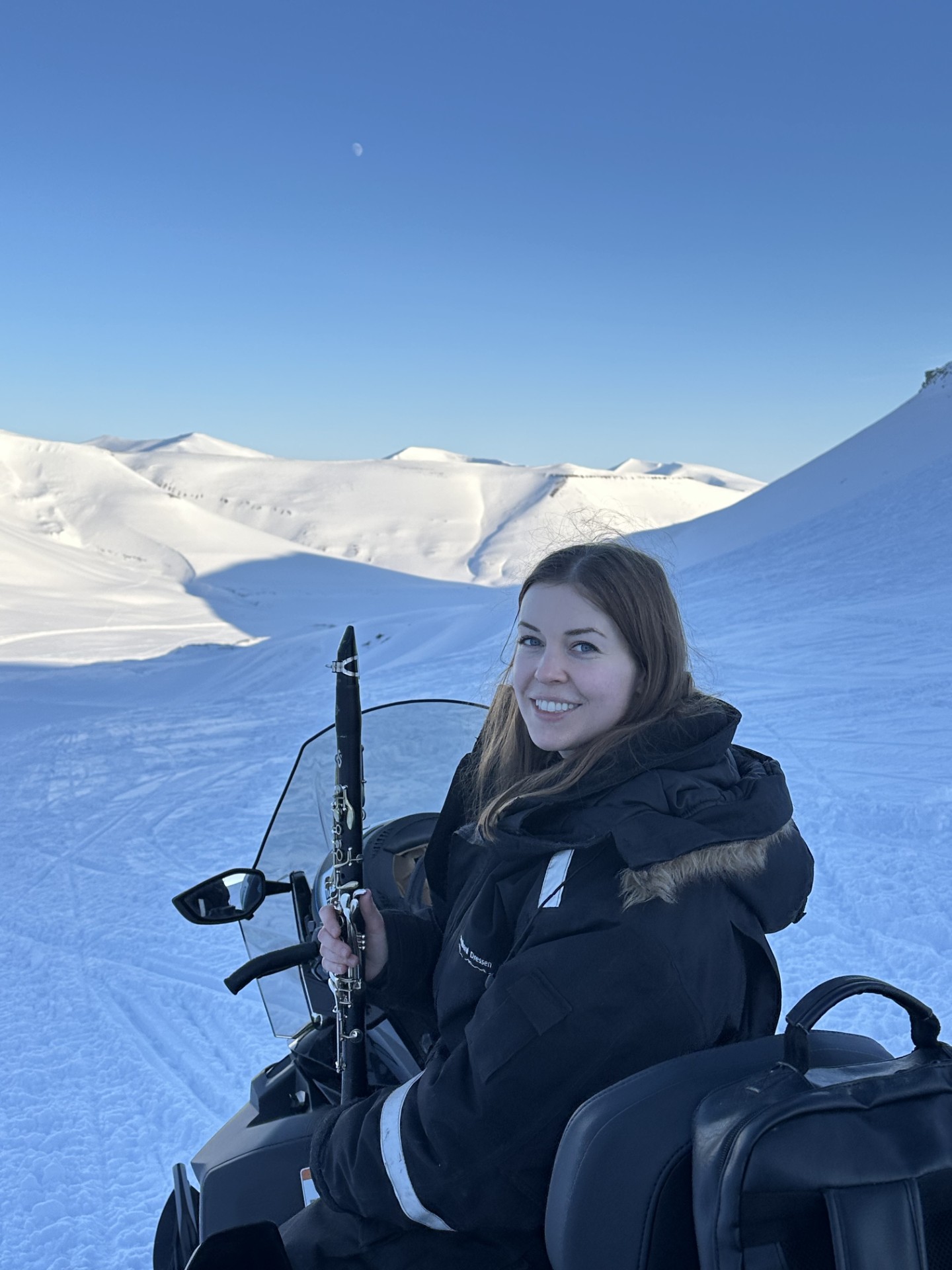
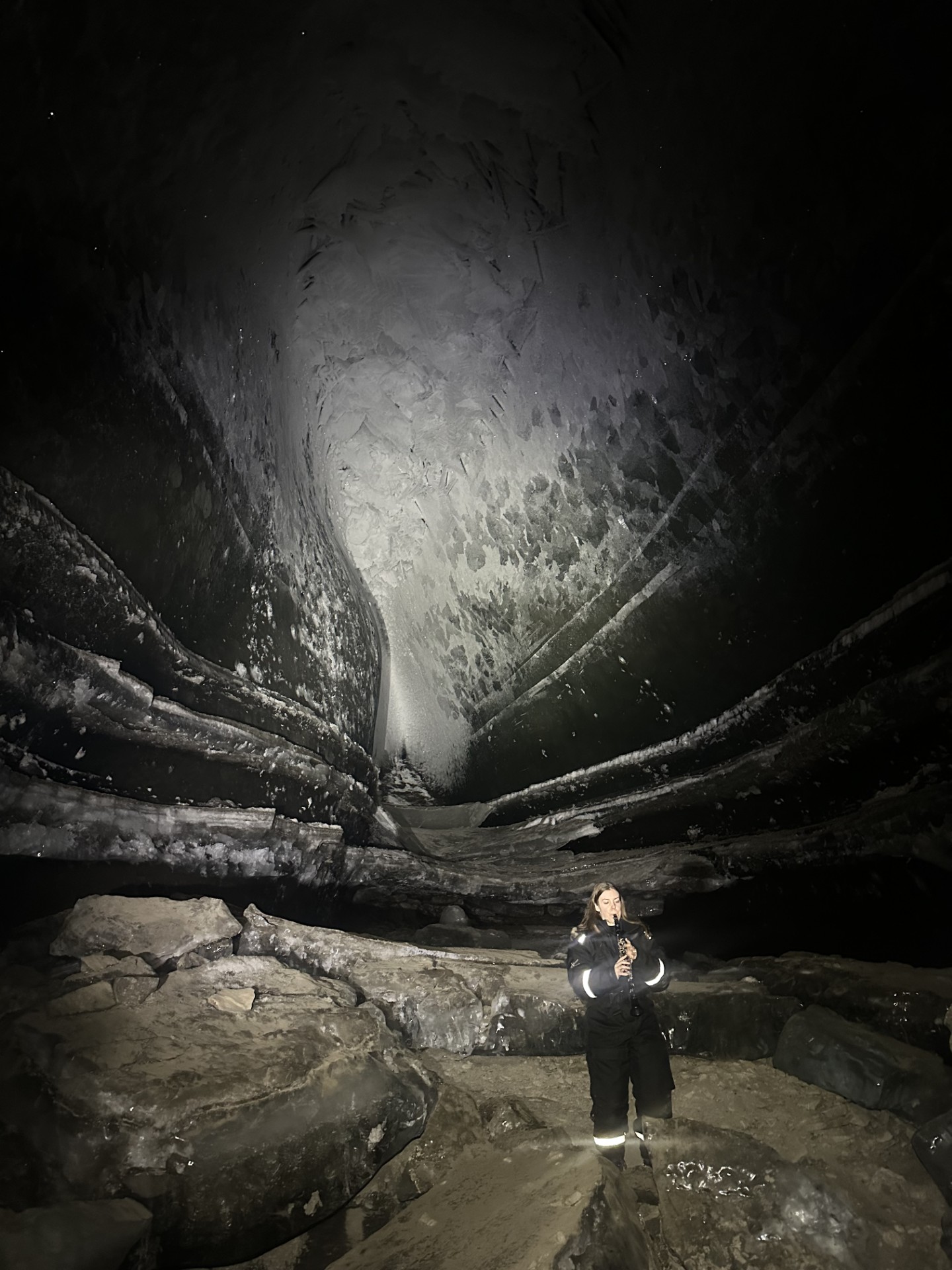
My final Arctic adventure with my clarinet was perhaps my favorite – exploring an ice cave to perform in the “cathedral” room. My local guide was Kanerva, who took us snowmobiling outside Longyearbyen to visit the ice cave. She led me into the depths of the ice cave, where I admired crystals, ice, and formations thousands of years old.
The inside temperature of the ice cave was about 0°C, which felt absolutely boiling with my snowmobile suit on. The “cathedral room” echoed like a concert hall, and the lights we used reflected off the crystals all around. I recorded myself playing a few pieces (listen to one here), then gave an impromptu mini-concert for other explorers.
After exiting the ice cave, we went to what felt like the edge of the world, where the jagged mountains stretched as far as the eye could see. I captured a few last drone shots before we returned to town.
Clarinet vs. the Arctic – who won?
When you purchase a wood clarinet, the first advice you probably hear is to NEVER play it outside or expose it to any sudden temperature changes, as these can cause cracks.
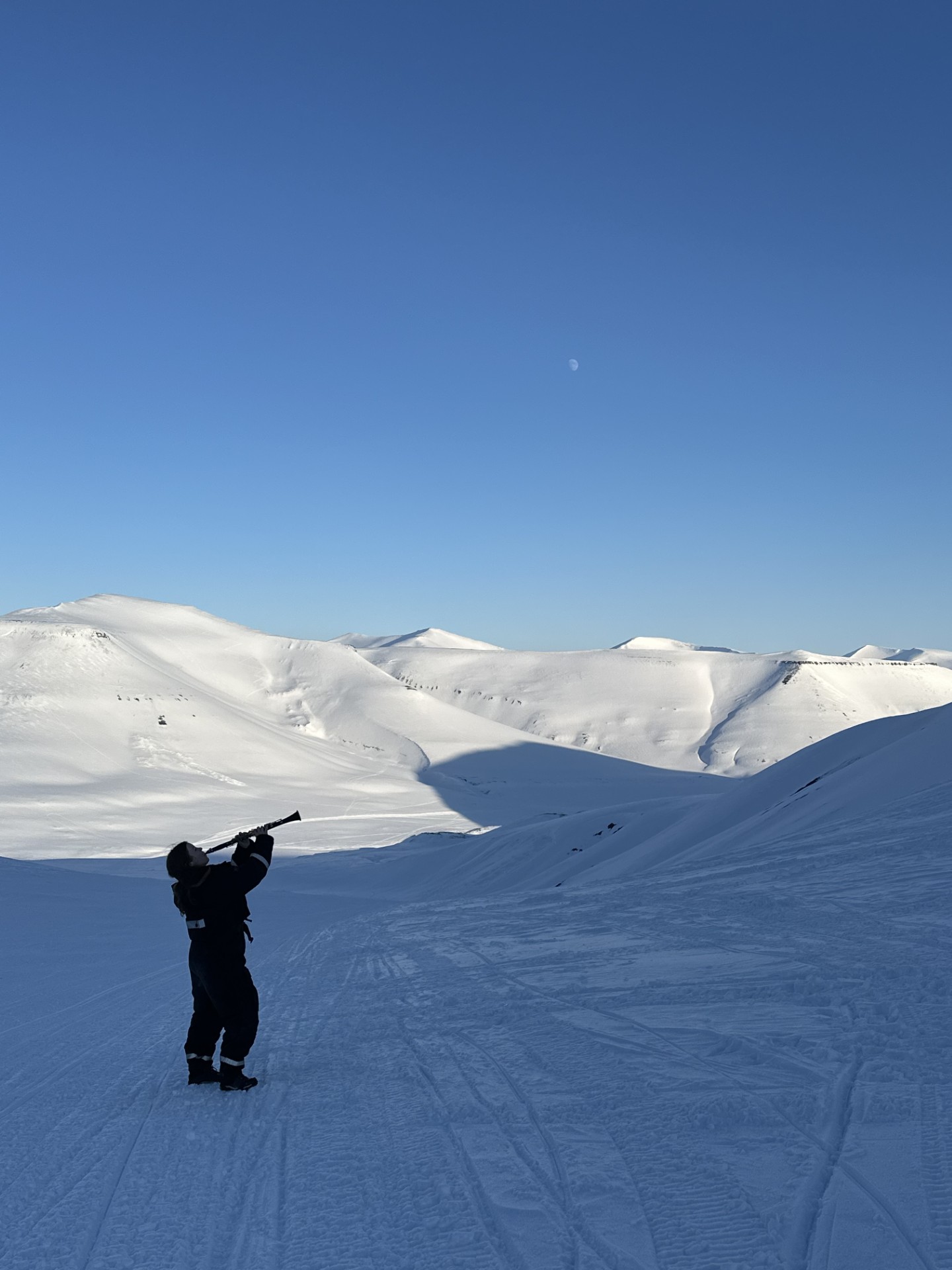
Well, I did exactly that these last few months in the Arctic. And the final outcome – do you think the clarinet cracked?
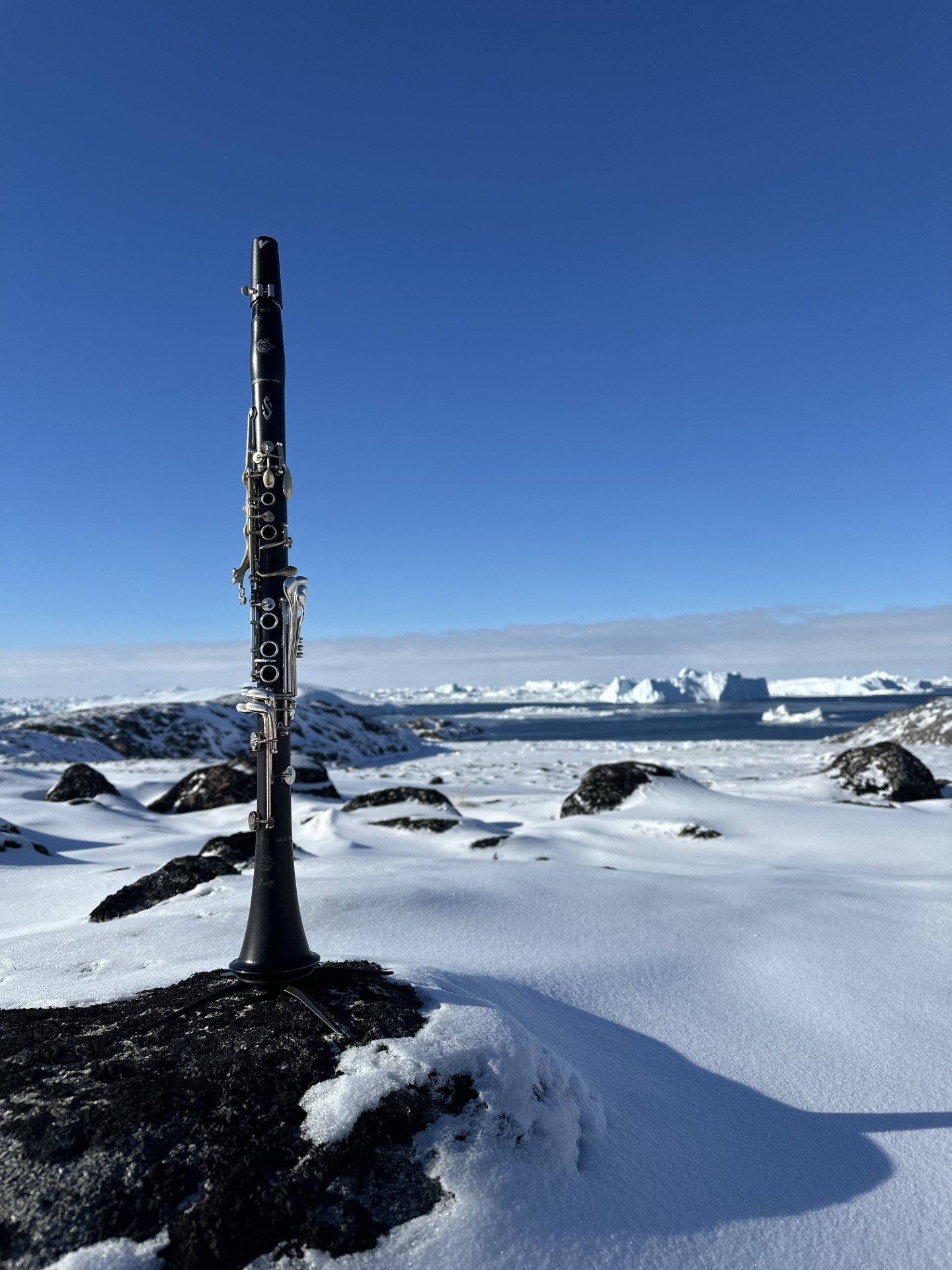
After months playing outside in the Arctic, my clarinet didn’t crack. Not once.
The Evolution system held up beautifully. In fact, I suffered more damage than the clarinet (mild frostbite, courtesy of winter kayaking sans gloves). I’m astounded at the resilience and durability of the Evolution system.
The first few times I played this clarinet outside, I was terrified that it would crack. With no repair techs around, I couldn’t afford a crack since I had several indoor concerts scheduled. The more I played it outside, I gained cautious confidence. By the end of these residencies, playing my wood clarinet outside in subzero temperatures didn’t even phase me, and it was amusing to see the reactions of other passers-by as they encountered a clarinetist in the most unexpected places.
I am still so impressed that this clarinet survived – perhaps even thrived – in some of the most extreme clarinet conditions on earth! In addition to not cracking, the keys didn’t bind, and I didn’t experience any negative reactions (besides mild frostbite on my fingers) to playing clarinet outdoors in the Arctic.
Final thoughts
All this to say – the Evolution system is amazing at helping to resist cracks…but you shouldn’t try this at home! Wood clarinets aren’t intended for extended outdoor use, especially in extreme climates like northern Greenland and Svalbard.
I am honored to participate in this very special project with the help of Henri Selmer Paris, and I am even more confident in my clarinet’s resilience as I continue to travel and perform around the world.
Stay tuned for an upcoming post with FAQ about playing the clarinet in the extreme cold! Leave a comment with any questions you have about my Arctic adventures.